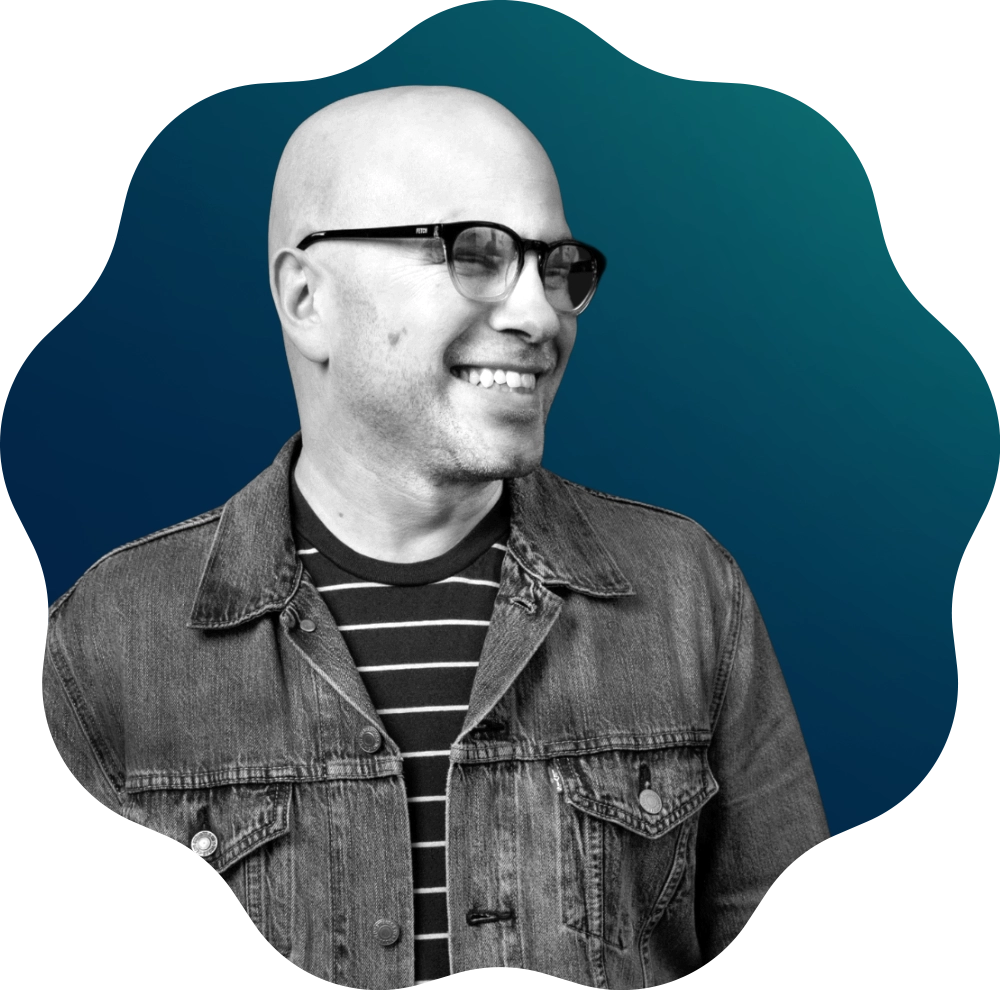

How You Heal from Depression, Anxiety, and Other Disorders | Dr. Curt Thompson (Ep. 21)
 |
 |
 |
In today’s episode, I’m joined by Dr. Curt Thompson, a Four on the Enneagram. We talk about why healing is more than simply treating symptoms, and how our stories, relationships, and wounds can shape our mental health. Curt also explores neuroplasticity, interpersonal neurobiology, and why being deeply seen, known, and loved by others can be such an important part of becoming whole.
Dr. Thompson is a board certified psychiatrist, author, speaker, and co-host of the Being Known Podcast. He is known for beautifully integrating neuroscience, human relationships, and faith. Many people have told me that his books such as The Anatomy of the Soul, The Soul of Shame, and The Soul of Desire have been life-changing.
You can learn more about Dr. Thompson, his podcast, and books at https://curtthompsonmd.com/
0:00 Audio Intro
0:20 Welcome
2:00 Curt Thompson's Enneagram Journey
5:50 Life as a Type 4
9:13 Rethinking Mental Health & Healing
24:57 Finding Agency in the Healing Process
31:36 The Long & Difficult Work of Healing
34:04 Why We Guard Against Healing
38:33 Neuroplasticity & the Hope for Change
46:07 What Is Interpersonal Neurobiology?
50:57 A Word for Therapists
53:02 Final Thoughts
Join the Mental Health ‘27 Summit Waitlist
Be the first to know when registration opens: typeish.com/summit/waitlist
Get FREE Enneagram Self-Typing Guide
Download here: https://www.typeish.com/free
Read The Transcript
Tyler Zach (00:20)
Welcome to Typeish, an Enneagram podcast where we explore how your personality shows up in all of life. I'm your host, Tyler Zach, and in each episode I connect you with leading experts on how your personality impacts your relationships, mental health, spirituality, and everything in between. Today we're kicking off a brand new miniseries on mental health — episodes 21 through 29 — in which I'll be unlocking exclusive interviews from my past Typeish Mental Health Summits.
In today's episode, I'm joined by Dr. Curt Thompson, an Enneagram 4. We talk about why healing is more than simply treating symptoms, and how our stories, relationships, and wounds shape our mental health. Curt also explores neuroplasticity, interpersonal neurobiology, and why being deeply seen, known, and loved by others is such a crucial part of becoming whole. Dr. Thompson is a board-certified psychiatrist, author, speaker, and co-host of the Being Known Podcast. Many people have told me that his books — The Anatomy of the Soul, The Soul of Shame, and The Soul of Desire — have been life-changing. You can learn more about Dr. Thompson at curtthompsonmd.com. Now, without further ado, let's jump in.
Tyler Zach (02:00)
How did you come to find the Enneagram and your number? When did you first encounter it, and how do you incorporate it today in your practice?
Dr. Curt Thompson (02:13)
Oddly enough, I was in a workshop with Dan Siegel about 20 years ago — and incidentally, I understand Dan is also a guest on this summit. Dan mentioned the Enneagram and I had never heard of it. Pretty much ever since then I've been reading about it. It's obviously gained a lot of traction in the last five to ten years, but that's when I first encountered it.
I want to be clear that I don't claim to be an Enneagram expert. What I would say is that the Enneagram is one of many tools in our bag. And one of the things I find true of any tool we use to help describe human experience is that all healing requires an expansion of the imagination.
I had rotator cuff surgery about eight weeks ago. After surgery, you're in a sling and you develop a guarding response. When you go to physical therapy, the therapist needs to move your arm in ways that feel threatening — and every time they move toward that, there's resistance. Not because I'm being obstinate, but because of the wound. There's real pain there. And so the invitation to expand a patient's imagination about what their arm and shoulder are supposed to be able to do is a crucial part of the healing work. It's also a crucial part of normal development — this is what parents have to do with their children all the time.
I find that the Enneagram creates an opportunity for people to imagine their lives in ways that give them handholds — to think about the way they're making their way in the world. And once someone has those descriptions, the question becomes: given that I know I'm a four, or wherever I am in the system, what does it look like to live in a more integrated way? Those descriptions help expand the imagination, and that expansion is part of the healing journey.
Tyler Zach (05:50)
Were there any signs early on that led you to identify with type four?
Dr. Curt Thompson (05:58)
I'll have to tell you: not once have I ever self-identified as a four. I have only ever responded to people who tell me that's what I am. I remember the first time I was in an immersive half-day workshop and I came out of it genuinely torn — am I this, or am I that? My wife was more than happy to share her opinion, and a couple of friends who've done a lot of work in this area have reflected that four doesn't seem far off the mark for me. Whether I am or not — I suppose we could take a vote.
But I want to be clear: all of those people were offering reflections, not telling me what I was. And I think that plays to something really important — something I hold from both a Christian anthropological standpoint and from interpersonal neurobiology: I don't really have the most deeply felt sense of who I am until I see myself in your eyes. I don't really know my name until I hear you call it. That whole sense of what Dan Siegel calls "feeling felt." In order for me to become aware of who I am, I need the help of others — and I need it deeply and desperately.
Tyler Zach (09:13)
I want to bookmark that idea and come back to it before we close. But first — one of the things I've been exploring is the idea that there are different barriers and bridges to healing and wholeness. One barrier you've highlighted involves oversimplifying complex mental health issues. When someone comes into your office with OCD, bipolar disorder, or severe depression, one approach says: you have depression, here's the treatment. But you've highlighted that depression is deeply intertwined with our behaviors, our stories, and our memories. Can you walk us through how you approach this — what variables you're actually considering when a new patient arrives?
Dr. Curt Thompson (11:01)
First let me say: it's a beautiful question, not just a good one. It's a question grounded in compassion and mercy, in a deep longing for people not just to be not-sick, but to flourish — to become who they were made to be. I also want to acknowledge that it can be easy to talk about these things abstractly and forget that we're talking about real people with real lives and real suffering. I want to come to this with humility.
Here's the first reflection I'd offer. We are approaching this question in a postmodern, post-Enlightenment context in which, over the last 500 years, we have come to imagine human beings almost as machines. No one would consciously say they're a machine. But the way we talk — we act as if we're an engine with a problem that can be fixed. And I want to say clearly: I don't believe that's the world we live in. We are not brains on sticks. We are creatures made as image-bearers who are loved by the one who made us. And so even the question of mental health has to begin with: what are we actually talking about?
From an interpersonal neurobiological standpoint, we can talk about what Daniel Siegel calls the FACES acronym — being flexible, adaptive, coherent, energized, and stable, that is, integrated. That's one way to describe what mental health actually is. But I'd also say: in what ways is my life manifesting more consistently love, joy, peace, patience, kindness, goodness, faithfulness, gentleness, self-control? In what ways is my life increasingly reflecting the Sermon on the Mount? That's a different question. It presumes that we are not problems to be solved but icons of beauty in the process of being revealed.
So when someone comes into my office and says "I'm depressed" — or "my primary care doctor told me I have depression" — one of the first things we have to do is invite them to notice that they've been told they live in a story where they're a machine with a problem called depression. If I were to ask them to locate that depression for me, they couldn't. That's not to say they're not depressed. But there is, in some respects, no such thing as depression the way we sometimes talk about it as an isolated entity. It means we're experiencing something neurophysiologically — and yes, there are times when pharmacology is part of the approach. But it's not either-or binary thinking. It's about what can we do to invite people to begin telling their stories more truly.
For healing to take place for a person with depression or anxiety, the first thing that has to happen is presence. They may be coming in thinking they'll receive what amounts to an antibiotic for bronchitis — get a prescription, go home, fixed. But I want our listeners to remember: we all have stories that are broken, just like my rotator cuff was torn. And my brokenness has me guarding against anyone who wants to help me heal. The first thing I need is for a healer to come into the room. I need presence. And then I need an invitation to open my eyes and become attentive — to begin to ask: what have I been paying attention to? What is the story I've been telling? What's been making me anxious all this time?
Often people will say, "I just want my panic attacks to stop." And I want to say to them: your brain, when you're having panic attacks, is doing exactly what we would expect it to do. It's functioning quite normally under the conditions in which you've been asking it to live. That's unsettling at first. But we gently invite people to get curious about the panic, the depression, the eating behavior, the substance use — these are signals telling us something about the story they believe is true about who they are.
The trouble is that many people have been practicing for a long time at burying that story, burying the wounds and the trauma and the unrepaired ruptures. And the brain burns a lot of energy containing all of that. At some point it gets tired and starts sending signals. If the first signal doesn't get our attention, it sends a bigger one. And eventually we run out of energy containing the anxiety and we start to wane — and this thing called depression starts to show up. Difficulty concentrating. Sleep disruption. Affective dysregulation. Now, there are other conditions — schizophrenia, bipolar disorder — that involve primary neurobiological features that add additional complexity. And at that point we're also talking about the people around that person, because the system they live in — family of origin, current family, workplace — is also part of how they're being shaped and formed.
This is what we know: human beings are being formed all the time. The question is, what is the story you believe is true that will be the most powerful forming force in your life? What happens in therapy, in pastoral care, in deep friendship is this: healing requires presence. It requires invitation to name the parts of ourselves that are most painful. And essentially what's happening for the patient — as hard as it is — is that they are allowing themselves to be loved. All healing work is about loving one another. Those of us looking for healing are really looking to allow ourselves to be loved. The reason I don't love well in any given moment is that the part of me that itself doesn't believe it's loved has grabbed the steering wheel. And the hardest thing for human beings is to allow themselves to be loved — because we have enough memory of enough events in our lives where the wounding took place in the very context where love was what we were expecting.
Presence, telling our stories more truly over the long haul — this is what enables the creation of beauty and goodness in a durable way. Because we're not just trying to keep people from being depressed. We want to ask them: what is the next artifact of beauty and goodness that God is inviting you to create in the world? Because that's what we were made to do.
Tyler Zach (23:41)
Very well put — and very poetic. I love the idea of not thinking of ourselves as thinking heads on a stick, but as beautifully made human beings with behaviors, stories, and memories that deserve to be honored. Connecting to that: another barrier is the belief that depression is this external thing happening to me — which can lead to a feeling of powerlessness, and to an over-reliance on external solutions like medication. Can you talk about how that belief acts as a barrier and how you address it?
Dr. Curt Thompson (24:57)
One thing I think a casual observation of human beings would confirm is that we are rhythmic creatures. Whether it's our gait, our heart rate, our pulmonary rhythm — we're rhythmic. We're also rhythmic interpersonally: we long for moments of solitude, and then we long for connection, and that connection leads back to solitude, back and forth. And the same is true of how we understand our experience, because some of our experience is deeply internal — what's happening within my mind — but as we say in the definition of the mind in interpersonal neurobiology, we are an embodied and relational process that emerges from within and between brains. Always this back and forth.
Healthy healing requires that same rhythm. There is a degree to which I come to the physical therapist and there is something they can do that I can't do for myself — they have expertise I simply don't have. Prozac is something external to me. A therapist is someone other than me. There are things external to me that I need. But then the physical therapist sends me home with exercises — and I have to contend with whether I actually do them. So there's both an external part of the rhythm that may be necessary and an internal part that's equally necessary.
I had a patient come in a couple of weeks ago who said: "I'm here to get my medicine adjusted because I'm more depressed." In the course of our conversation, as they told their story, it became clear that increasing their Paxil was not the response that was needed. What was needed were steps that only they could take — behavioral and cognitive steps. Paxil wasn't going to answer for that. There are things medication is necessary for, part of the rhythm. But there's another part of the rhythm that's internal and necessary too.
I think part of what we're doing in a conversation like this — even thinking about the Enneagram — is recognizing that the Enneagram might look like an external thing: "I am this because I'm a four." But if the Enneagram never existed, you'd still be whatever you are. The question is: what do I want to do with this? Not what is the external thing going to tell me to do. It might be helpful — but then I'm rhythmically going to have to come back to the relationship I hold with it as well. This is really about acquiring wisdom so that we can flourish. And I've become increasingly aware, as I've gotten older, of how much I think in binary terms — either this or that — when in fact the world is far more rhythmic and diffuse. Healing is never just me healing. We help me heal. We help you heal. We do this together. My healing affects others and will be affected by others. That relational dynamic is always in play.
Tyler Zach (30:56)
This is really helpful for therapists listening. What you really need is a therapist who truly cares about you, sees you as a human being with a story, and has the time and energy to help you unpack it. We can feel when someone truly sees us — whether it's a therapist, a doctor, or even a grocery store clerk. That care is palpable.
Dr. Curt Thompson (31:36)
I want to just highlight something, because I'm aware that even in this conversation, someone might hear me say "just go in, tell your story, and everything will be fine" — and I want to be careful. Human stories are fragile. Really fragile. Not because we're weak or stupid, but because we're human. The work we're talking about is often long and excruciating. There are some people for whom symptoms are never completely resolved because of the complexity of the interaction between their brain, their mind, their relationships, their body, their life, the system they live in. We're doing the best we can.
I think of Job's friends. They were with him for a while — and I wish they'd been able to stay in that posture of just saying: "We don't know what's going on. But we're not leaving the room. We're going to keep asking questions and talking with you, but we're not going to tell you we have the answers, because we don't." Now, I'm not saying we want therapists who just perpetually say "I don't know." That's not helpful. But we have to acknowledge that some stories feel so weighty that the healing process is long and laborious. And I want to name that with honesty.
Tyler Zach (34:04)
As a fellow human being rather than a trained clinician, what I'm taking away from this conversation is: first, you have to hand yourself over to someone who can care for you and ask you hard questions. And as Dr. Jerome Lubbe said in a conversation I had with him: the healing process will hurt, but it's not supposed to be harmful.
Dr. Curt Thompson (34:47)
I'm reminded again of the physical therapy work on my shoulder. I mentioned guarding earlier — and one of the most important things I came to recognize is that most of the time I'm not even aware that I'm doing it. The therapist would try to move my arm in a certain direction and say, "I notice you're guarding." And I'd say, "What are you talking about?" I didn't know I was contributing to the pain at all through guarding. I didn't know I wasn't relaxing enough. They had to point it out. And then they had to capture my imagination — help me actually pay attention to what I was doing that was contributing to the ongoing stiffness in my shoulder, because of guarding I was actively creating without even knowing it.
And it's in that very work — which initially feels more painful — that I become aware not just of what has happened to me, but of what I am doing to myself that is part of why my healing is taking as long as it's taking. That's another crucial element of the healing process.
I'm reminded of the woman in Mark's gospel who had been bleeding for twelve years. She touches the hem of Jesus's garment and knows in her body immediately that she has been healed. She thinks she's done — she was hoping for what I might call commando healing: get in, get the job done, get out. Instead, Jesus stops the crowd and asks, "Who touched me?" She's startled. She wasn't expecting to be seen. And he's seeing something she doesn't even see in herself. She told him everything that had happened to her — but that was not part of her plan. So many times we come to therapists with a clear agenda: I want to no longer have symptoms, I want the bleeding to stop, and once it does I'm done. And it turns out really good therapists say: actually, there's so much more here that you don't even know about, that you're guarding against without realizing it.
Tyler Zach (38:33)
Well put. In our last ten minutes or so, I want to talk about neuroplasticity and interpersonal neurobiology — these are some of the bridges and pathways toward healing and wholeness. Can you walk us through neuroplasticity and how it creates hope for people who need healing?
Dr. Curt Thompson (39:04)
When I was in medical school almost 40 years ago, if someone had a stroke they might spend a couple of weeks on the neurology ward, receive some occupational and physical therapy, and then be sent home — with little hope that much more could be gained. Today, if you have a stroke, you might be immediately sent to a rehabilitation center where you're doing ten hours a day, seven days a week of intensive exercise work, working to regain as much function as possible. The reason we do that now is what we've learned about neuroplasticity over the last 25 to 30 years.
Neuroplasticity refers to the capacity of neural firing patterns in the brain to change. Neurons — brain cells — can grow in three ways: they can increase in size, they can develop more extensive connections with other neurons, and they can grow in number. For a long time it was believed that if brain tissue died from a stroke, there was no coming back. We know differently now.
Several things encourage neuroplasticity. Aerobic exercise. Proper sleep and diet. Deep reading. Humor — oddly enough. And perhaps most significantly: being deeply and expansively known in interpersonal relationships. Being truly seen calls on the mind to do the work of curiosity that it otherwise doesn't do. When my physical therapist says "Curt, do you notice you're guarding?" and I say "What are you talking about?" — and then they help me see it — they are literally turning on neurons in my mind that were not firing that way three minutes earlier. You are expanding my imagination.
Any time we're doing something completely new — imagining, for instance, that even though I had a brutal relationship with my father, I can now have a relationship with someone in which I will be loved and that brutality will not have dominance over me — that requires the expression and implementation of new neural networks. The fact that we can do this is genuinely good news. This is why, when the Apostle Paul writes to the church in Rome, "Do not be conformed to this world, but be transformed by the renewing of your mind" — for us today, we can say that's not just metaphor. That is live-action, real, new neural and somatic changes that we have agency in bringing about, in the presence of other people.
If you're willing to practice meditation for ten to fifteen minutes every day for six weeks, you're going to change your brain — measurably, verifiably. We could take a PET scan before and after and it would look different. We have to be careful not to let neuroscience overreach — it's very fashionable right now, and you can put a picture of a brain on your yogurt brand and sell more yogurt. We have to be honest about what it is and isn't telling us. But what it is telling us is enough: the changes I can undergo with other people are durable, and they enable me to become more the person I long to become.
Tyler Zach (45:30)
That gives me a lot of hope — knowing that things like deep reading, humor, and being in the presence of others who love you can actually reshape the brain over time. What else would you add about interpersonal neurobiology as we begin to close?
Dr. Curt Thompson (46:07)
Interpersonal neurobiology is a phrase that represents a field of study drawing together a number of different scientific disciplines — from bench neuroscience to physics, chemistry, anthropology, and more — all of which have a stake in answering: what is the mind? And then: what does a flourishing mind look like? Where these disciplines share common ground, there's a word for it — consilience — a kind of withness, a convergence between fields that otherwise don't share the same mission.
What's beautiful about it is that it reveals not just how I am operating, but that who I am and how I'm operating is deeply dependent on my interaction with you. It's not me over here and you over there — we together are forming each other. Always. You walk into a room full of your best friends and your heart rate might go up a bit, but your body relaxes. You walk into a courtroom as the defendant and everything in your mind is affected by who's in the room. We cannot be understood in isolation.
I think this is where we have to be really clear about what modernity has left us with. There's much about modernity that's good and beautiful. But one of its hollow elements is having convinced us that we are isolated individuals — silos — rather than beings who are quite deeply and necessarily connected to one another. The real question is: in what way am I paying attention to these connections so that I can live fully and flourishingly into the way the world was actually made to be dwelt within?
Tyler Zach (49:45)
It's so powerful to hear the science of interpersonal neurobiology and realize that our connections with others are what lead to healing and wholeness. That's a huge, huge point. I've really enjoyed this conversation, and it feels like we're cutting it short. I don't know if you're a four — I think others have done a pretty good job of convincing you — but I see a lot of four themes in the way you talk. The poetic quality, the use of pictures and metaphors and beautiful symbols, because some things can't be put into words. I appreciate the personal time with you, Curt — with a doctor who genuinely cares. Mental health is a massive challenge, but there's a right way to approach it: treat people as humans, listen to their stories, see them as image-bearers rather than machines. I got all of that just from being in your presence today.
Dr. Curt Thompson (50:57)
There's one more thing I want to say, especially for the therapists who are here. I tell therapists in training: your patients will come for your techniques — your psychodynamic work, your CBT, your EMDR, your IFS, all the acronyms. They're going to come for those skillsets. But the most important thing they're coming for is you. And we as therapists are not always convinced of that. I want therapists to know: your relationship with your patient is the most important thing in the room, because you are the most important thing in the room for them at that time.
And we can't give what we don't have. So my longing for every therapist here is to ask yourself: who is taking care of you? I put this question to pastors too — "Whose job is it to take care of you?" — and they look at me like I have two heads. Nobody takes care of me. And so if you haven't yet, I have a deep longing to know that you are soon going to have someone caring for you. Someone with whom you can be in the room and you don't have to perform. That's my word for the therapists.
Tyler Zach (52:45)
That's really good. Thank you so much, Curt, for joining us today. We really appreciate it.
Dr. Curt Thompson (52:51)
Tyler, it's been a real pleasure. Thanks so much for having me.